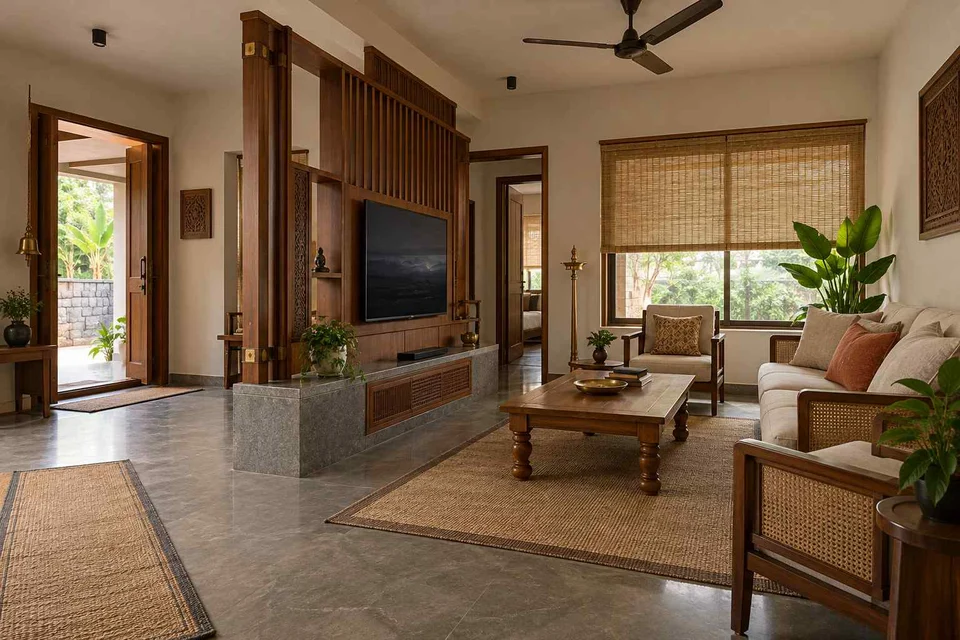
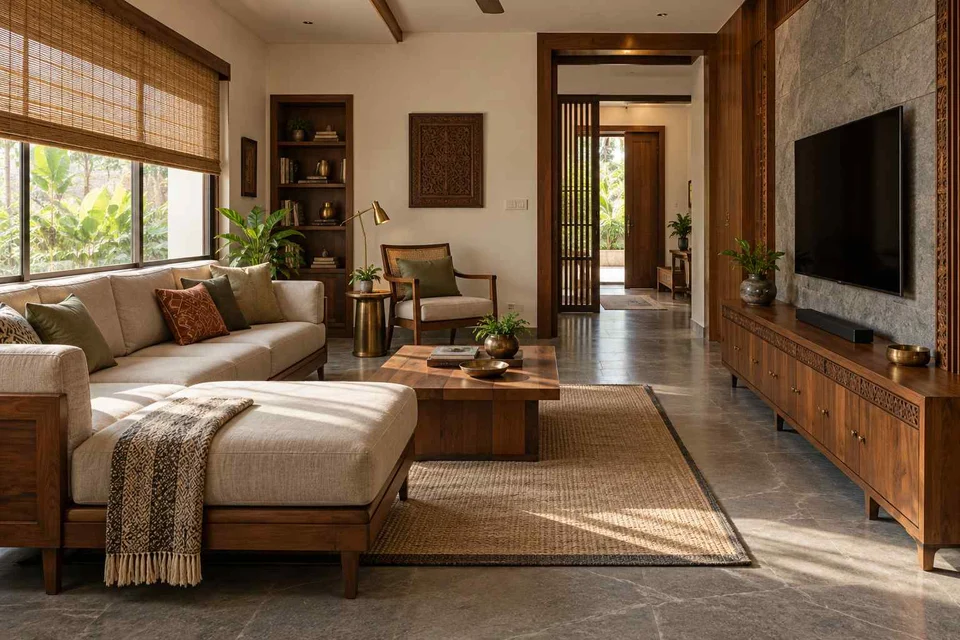
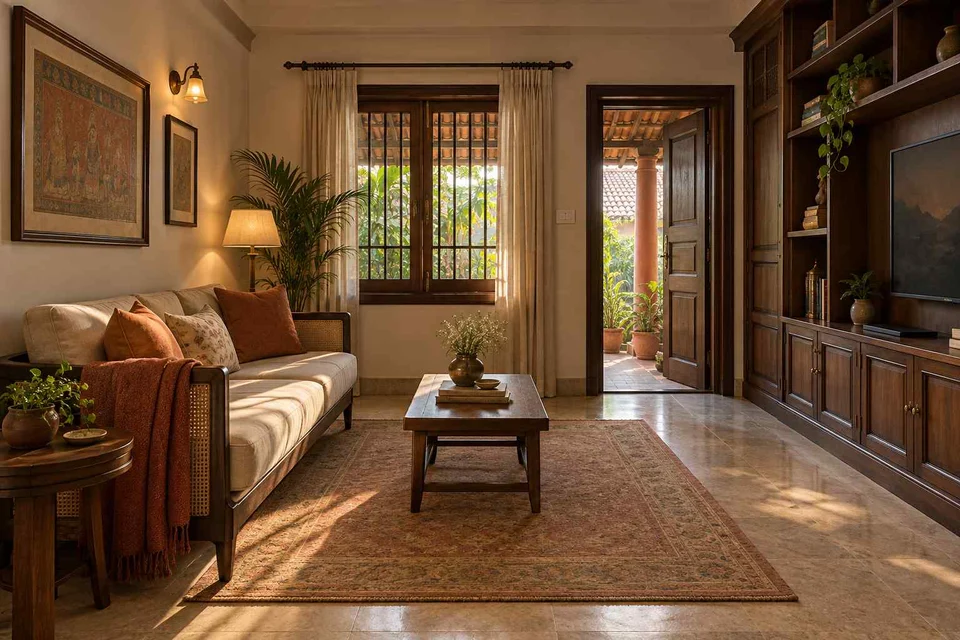
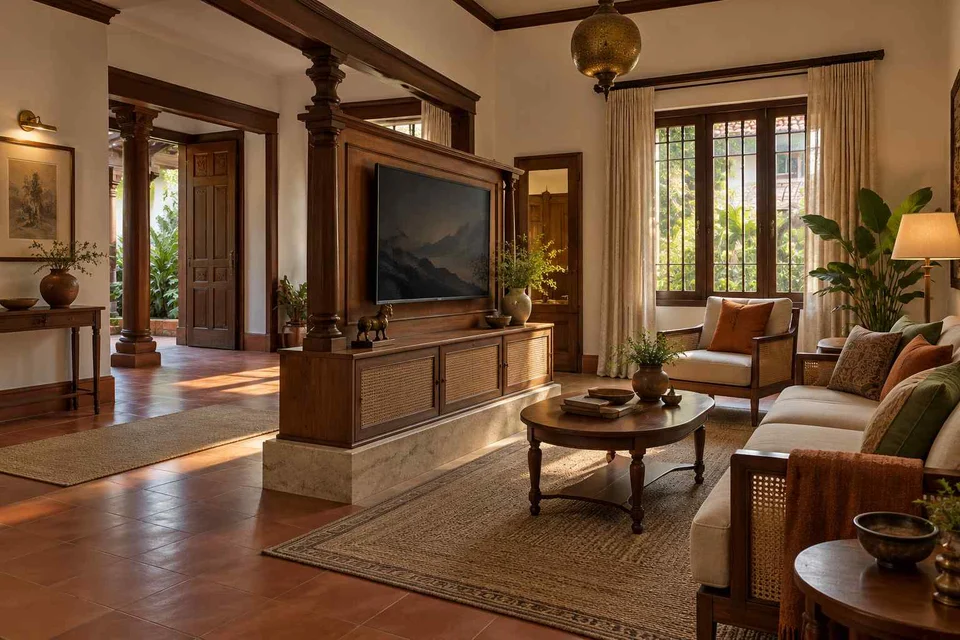
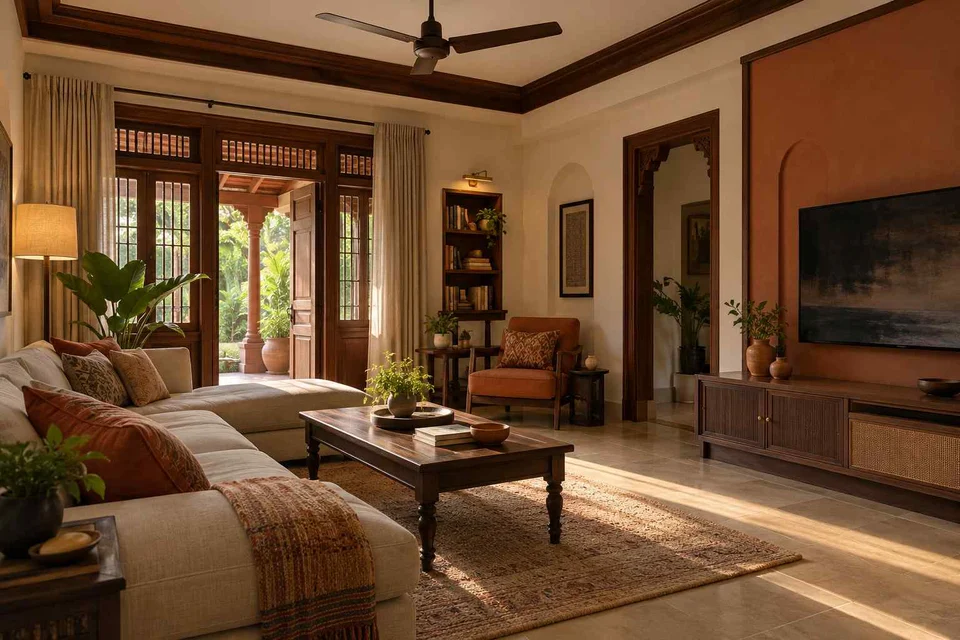
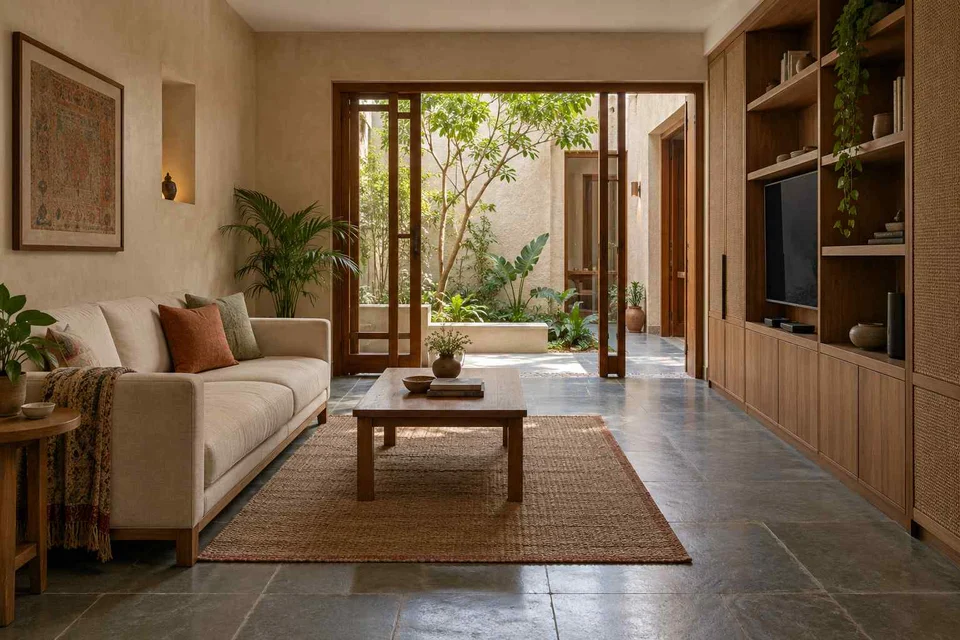
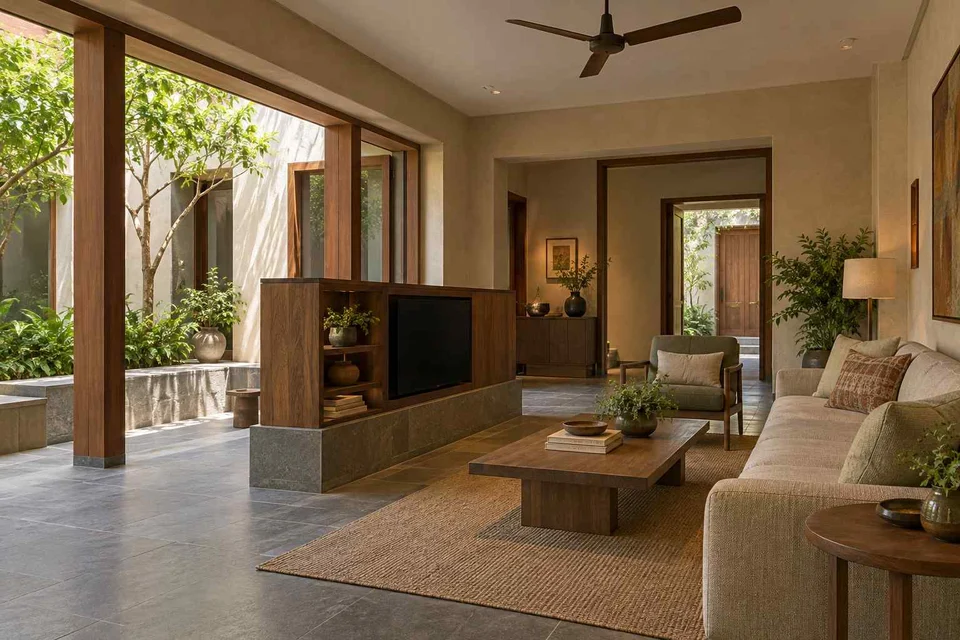
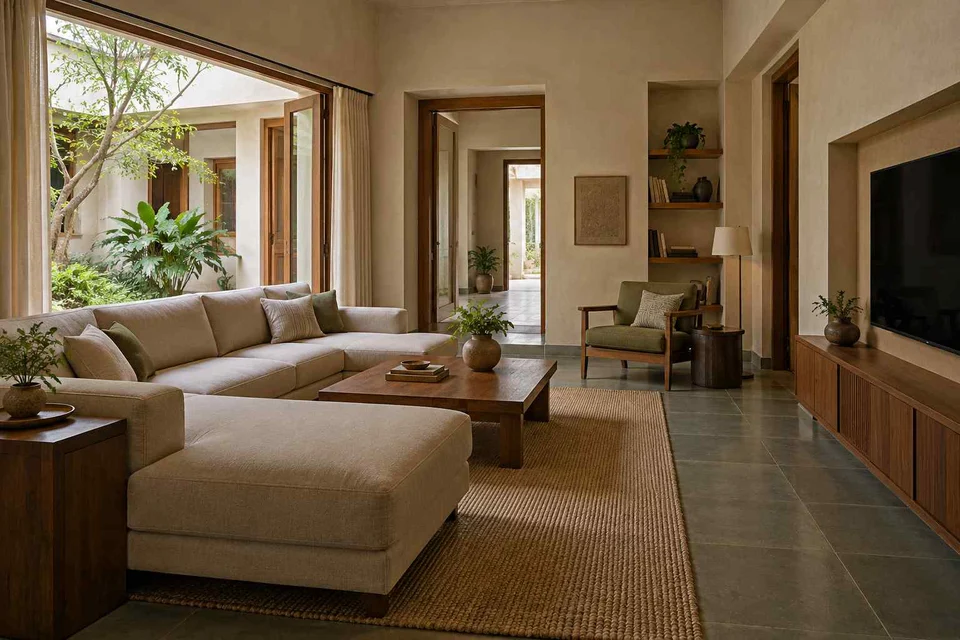
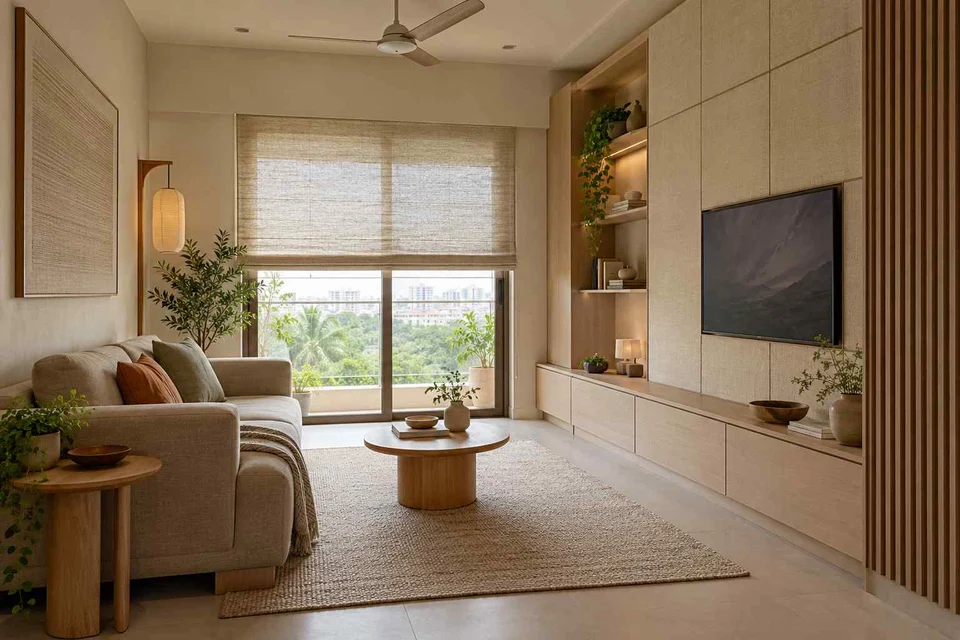
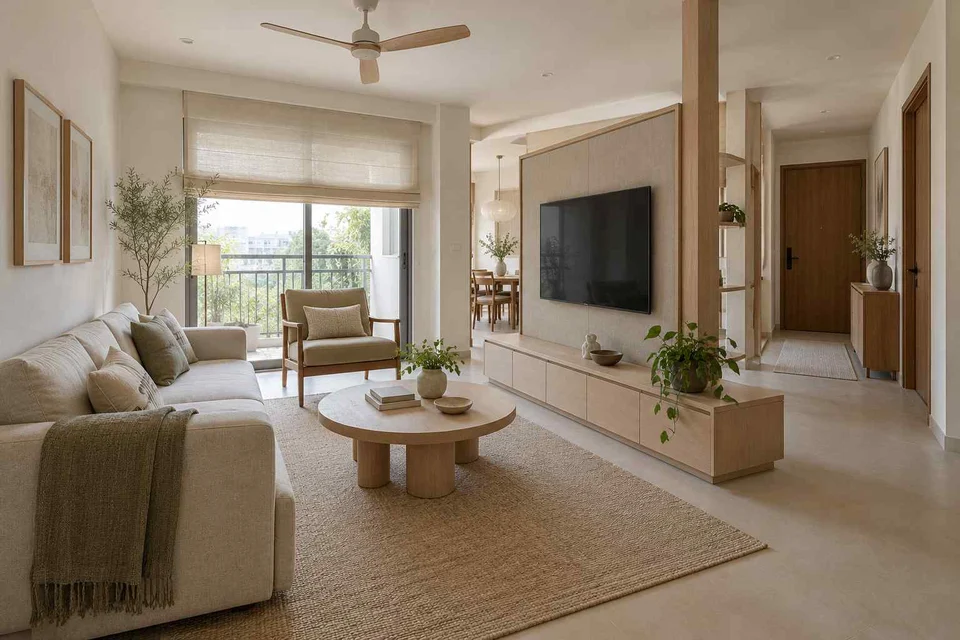
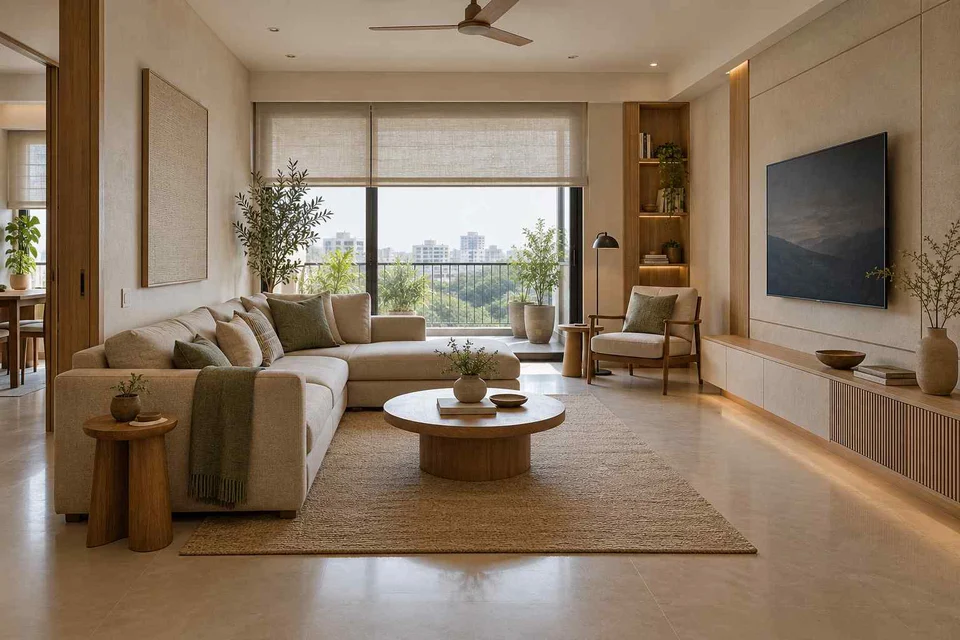
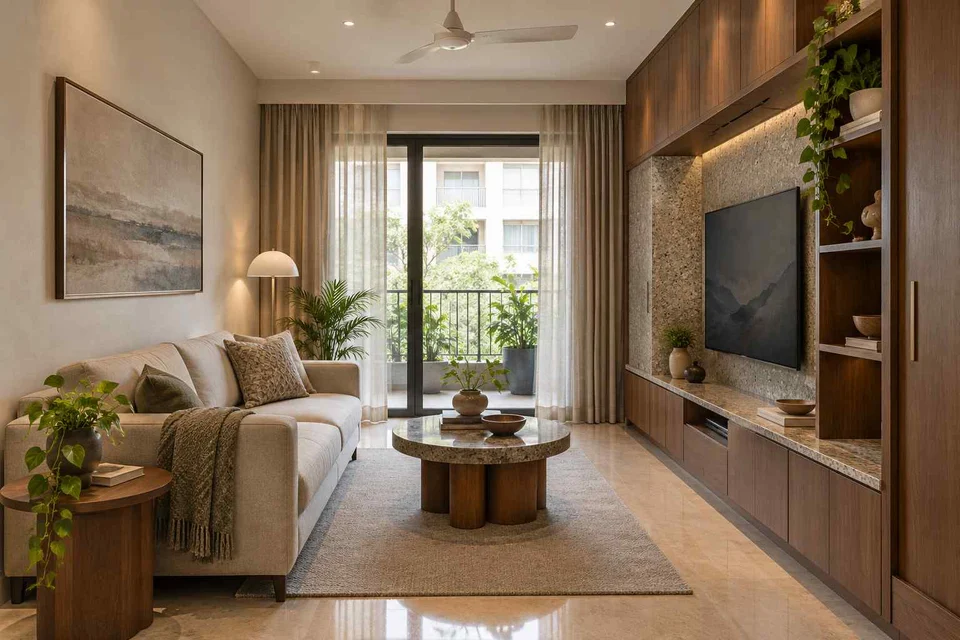
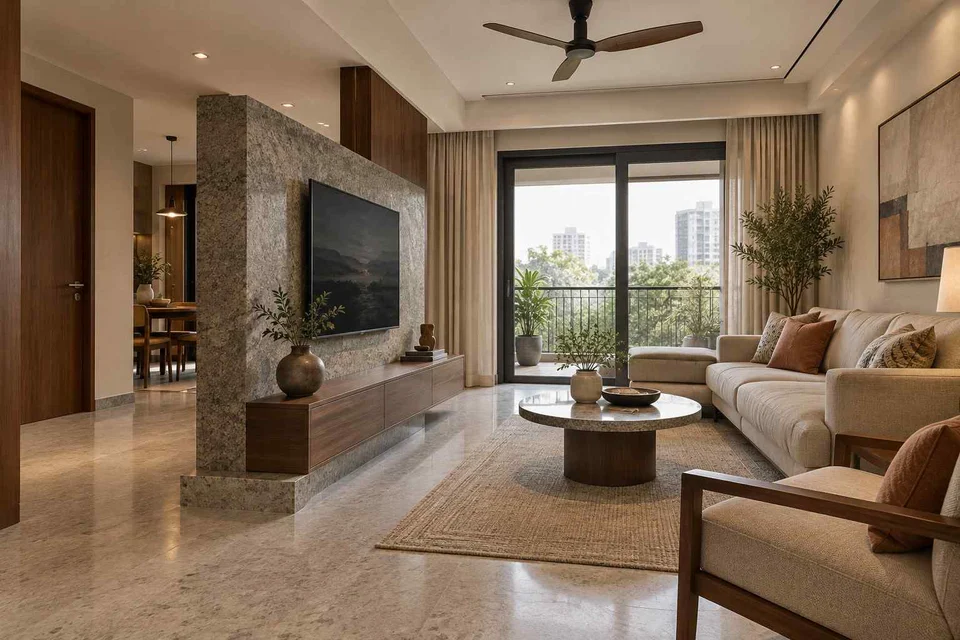
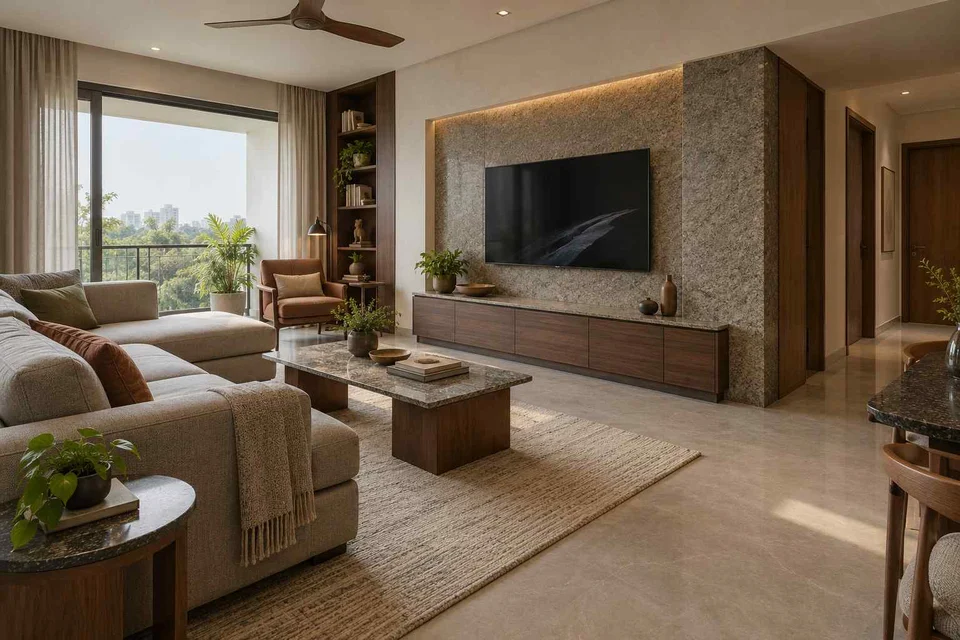
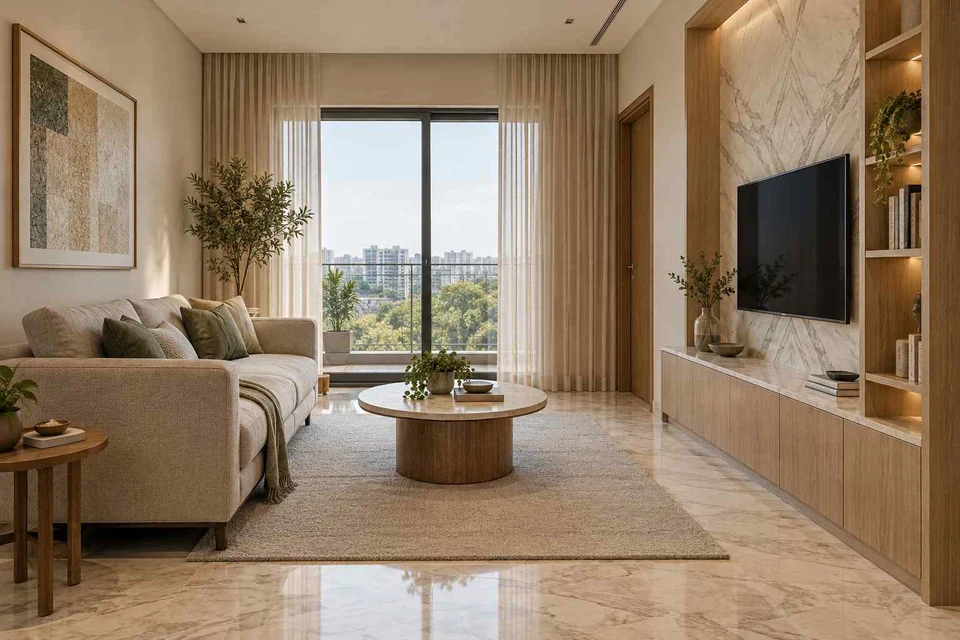
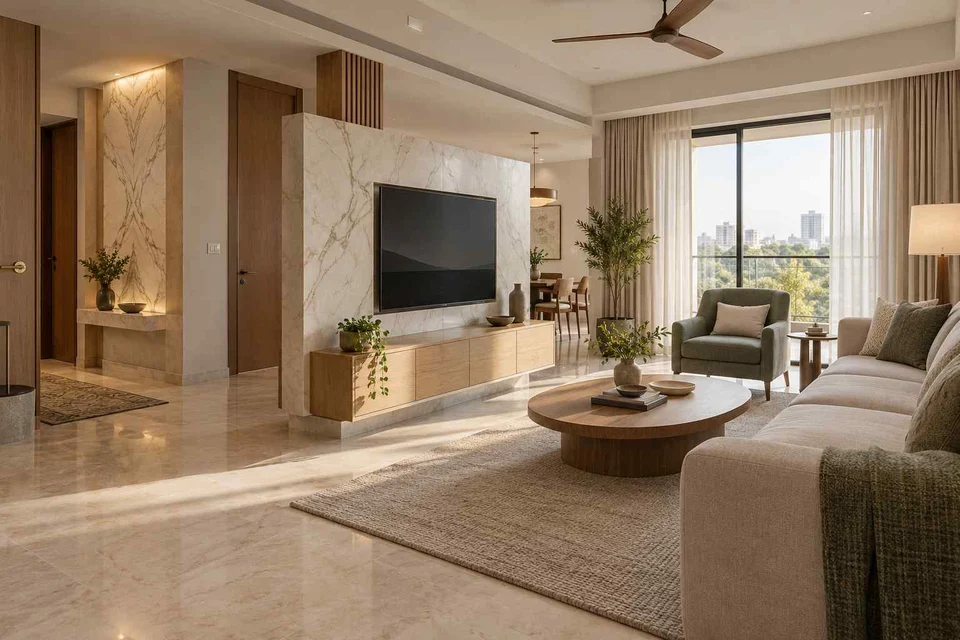
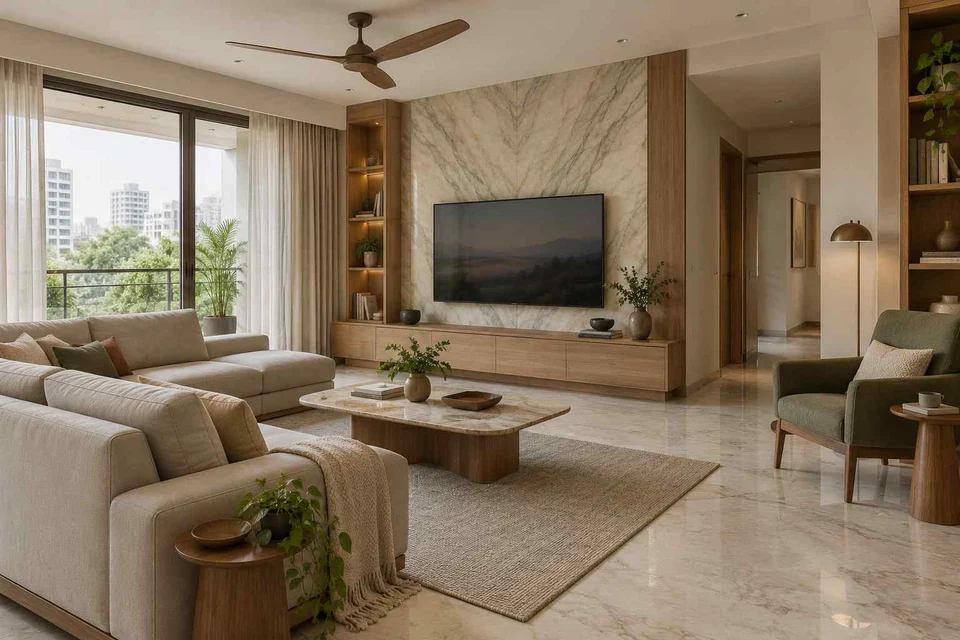
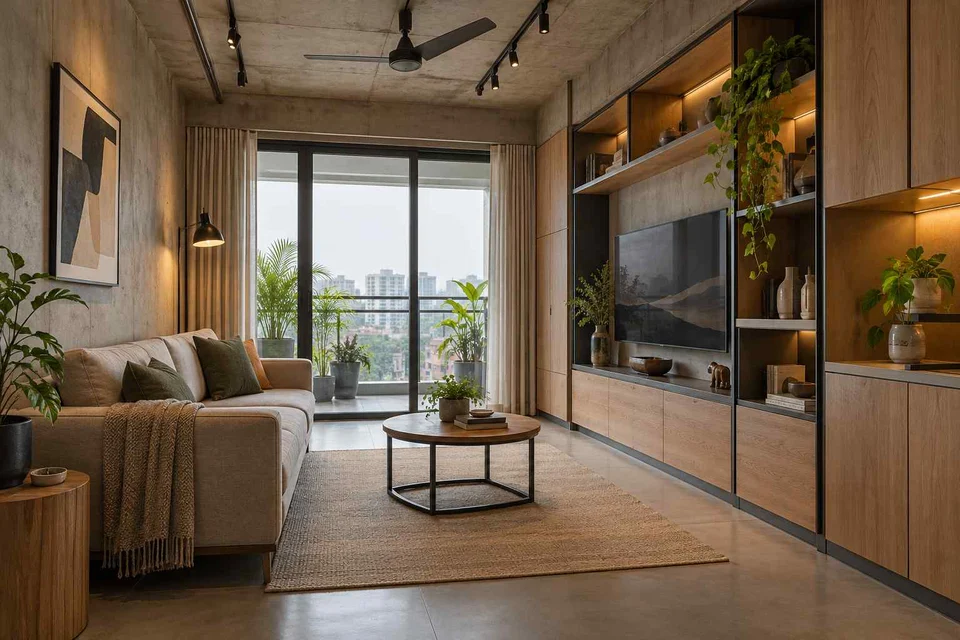
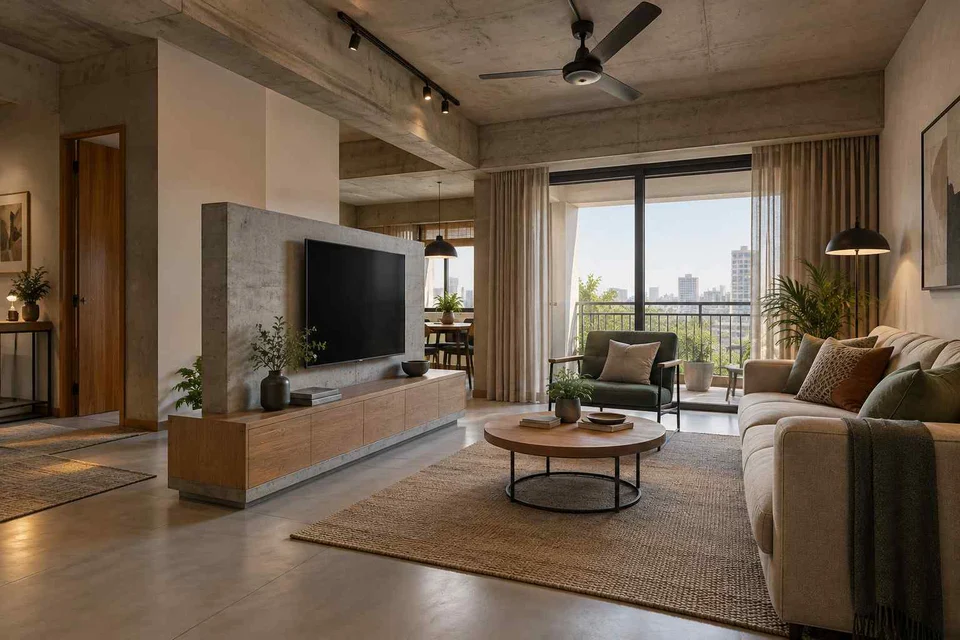
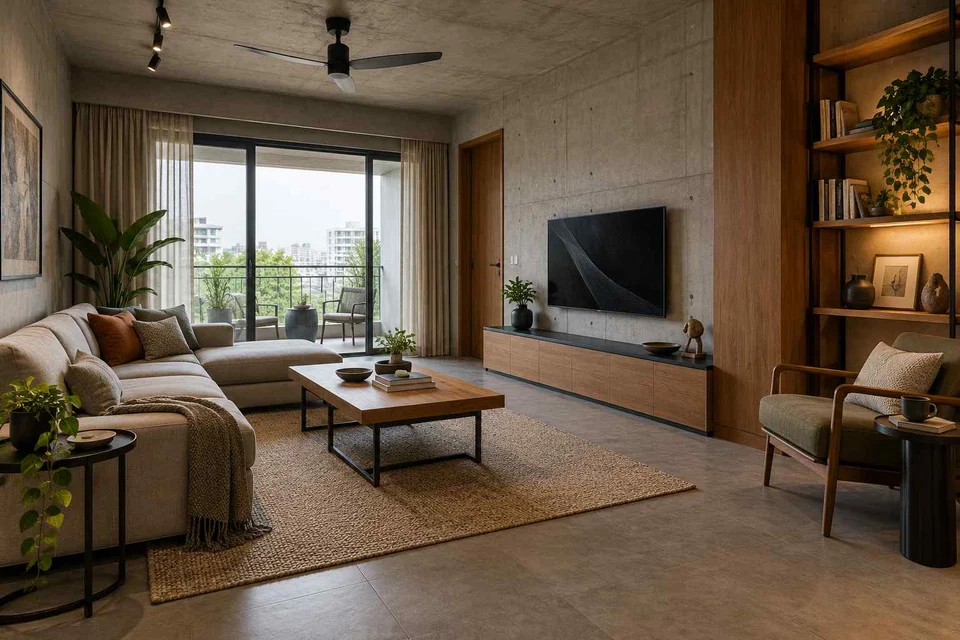
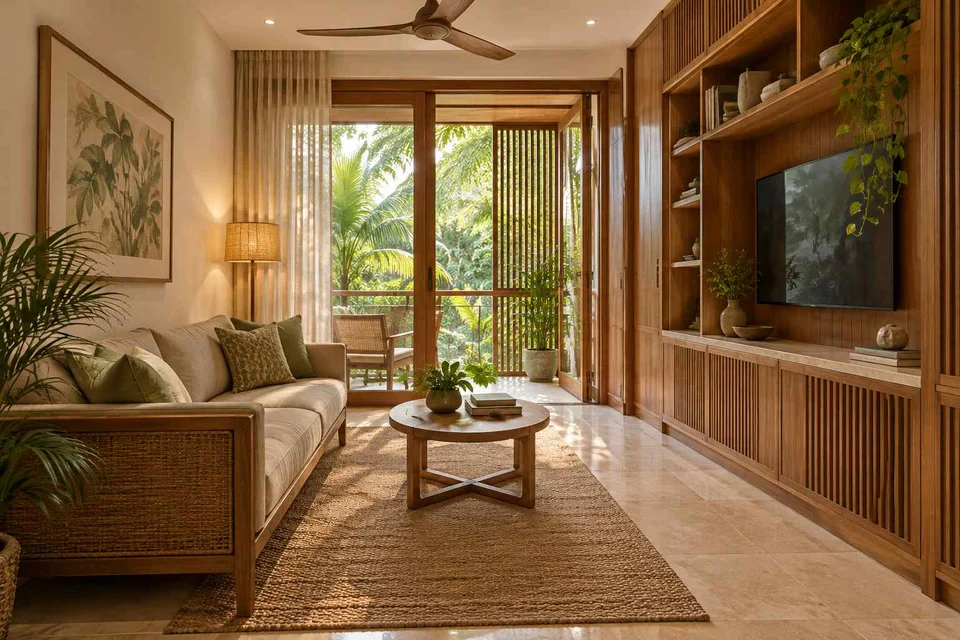
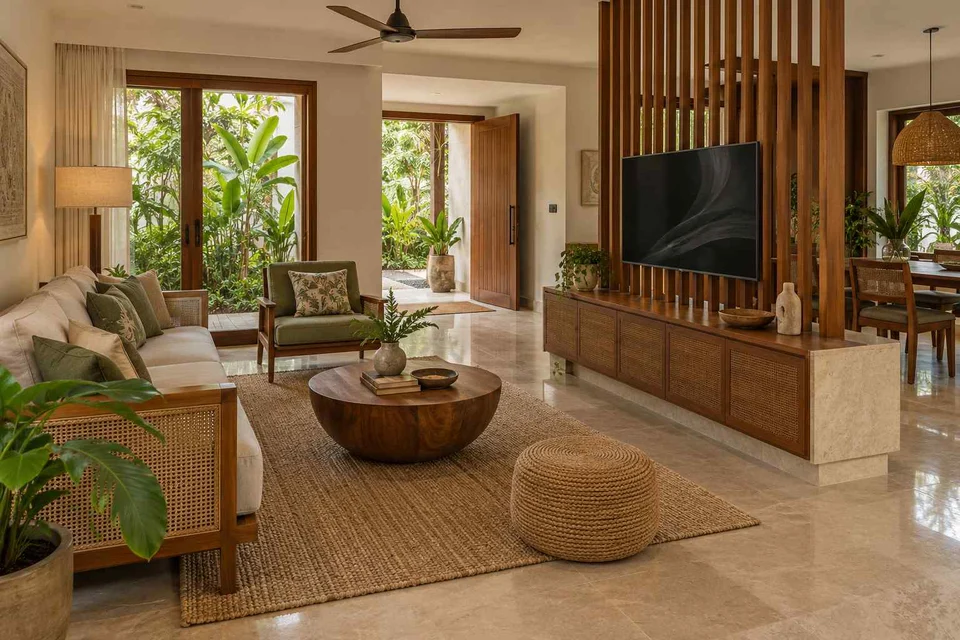
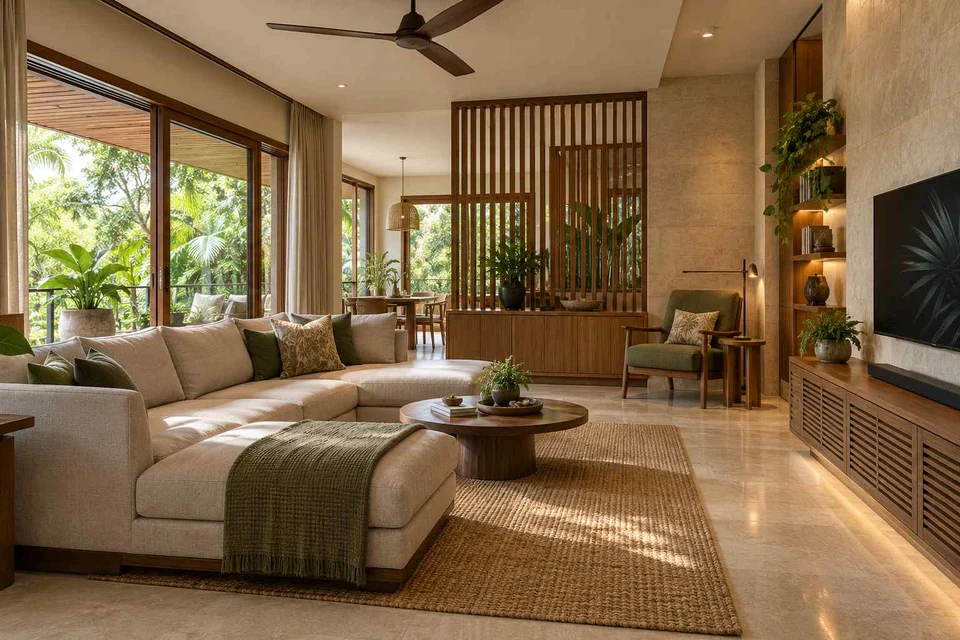
Start with an inventory of the things the television area needs to hold. These 24 concepts show different balances of closed cabinets, open shelving and display surfaces. The visible arrangement can guide a brief; it does not reveal internal compartments, cable paths or ventilation details.
Coordinate screen position, charging, concealed cabling and everyday storage before finalising the seating layout.
Compare the approaches
Compare the visible arrangement and the question it raises for your home. These AI-generated concepts illustrate design directions; dimensions, products, fixings and internal construction are not verified.
TV units with storage: six references and the decision each raises
Open shelving beside the television is paired with low closed cabinetry.
Which shelves should remain adjustable for objects or equipment that may change?
Selected and visually reviewed by Aangan Editorial
on . All six references are AI-generated concepts.
FROM INSPIRATION TO A BRIEF
Turn the reference into a practical brief
Make an inventory before choosing the cabinet
Separate devices that remain connected from remotes, controllers, books and objects you occasionally use. Record dimensions, cables and the way each item is accessed. Decide what needs to stay visible and what should be concealed. Ask for a drawing of the interior as well as the front elevation so that attractive doors do not hide an impractical storage arrangement.
Give working equipment a usable location
Discuss access to ports, power connections and removable components before fixing shelf positions. Check the manufacturer’s guidance for each device, including its ventilation and installation requirements. A clean-looking render does not prove that equipment will work behind a closed door or within a tight recess. Agree where cables enter, how they can be reached and what happens when a device is replaced.
Balance display, maintenance and flexibility
Open shelving keeps objects visible but requires decisions about what belongs on show. Closed cabinets change the appearance of the wall and need room for their doors and drawers to operate. If the unit forms a divider, consider access from both sides and the finished rear surface. Compare sample finishes and ask how the unit can be cleaned, repaired or adjusted over time.
Questions to start with
Can all the television equipment go behind closed doors?
That depends on the particular devices, controls and installation requirements. Do not infer it from a rendering. Review access, ventilation and operation with the designer and equipment supplier before approving the cabinet.
Are the shelves and drawers shown in these images dimensioned?
No. These are visual references. Ask for measured drawings that show usable internal sizes, hardware, door movement and any required cable or ventilation openings.
Should a TV unit include open shelves?
Choose around the objects you want to display and the upkeep you are comfortable with. A combination of open and closed storage can be useful, but the right balance depends on the inventory and the room.
Save the ideas you like and note what appeals to you: the layout, the storage or the materials. Use our
design brief guide
to prepare for a conversation with a professional, then
create your own brief
with your city, requirements and selected photos.
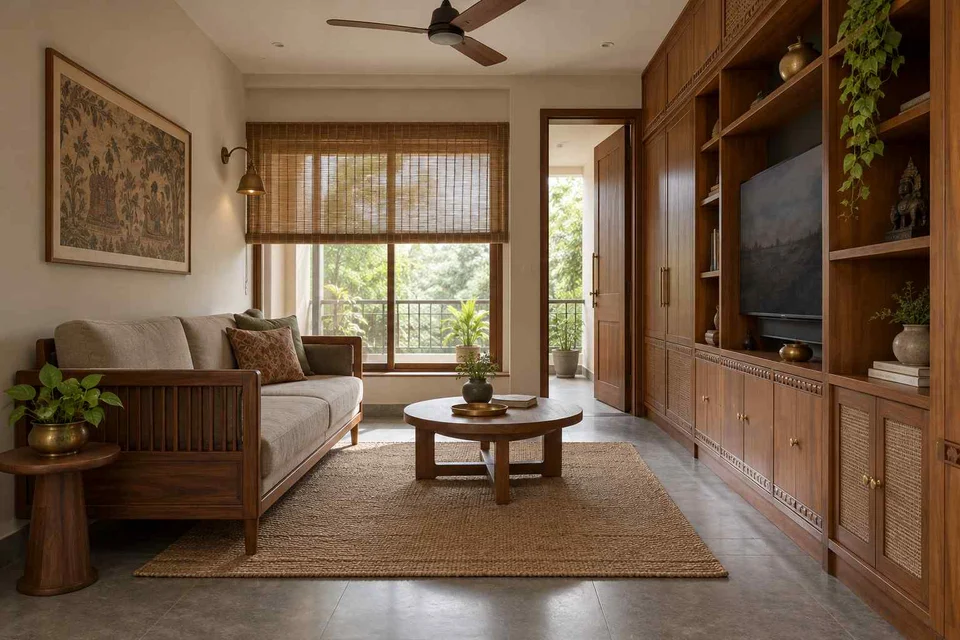 AI-generated design concept