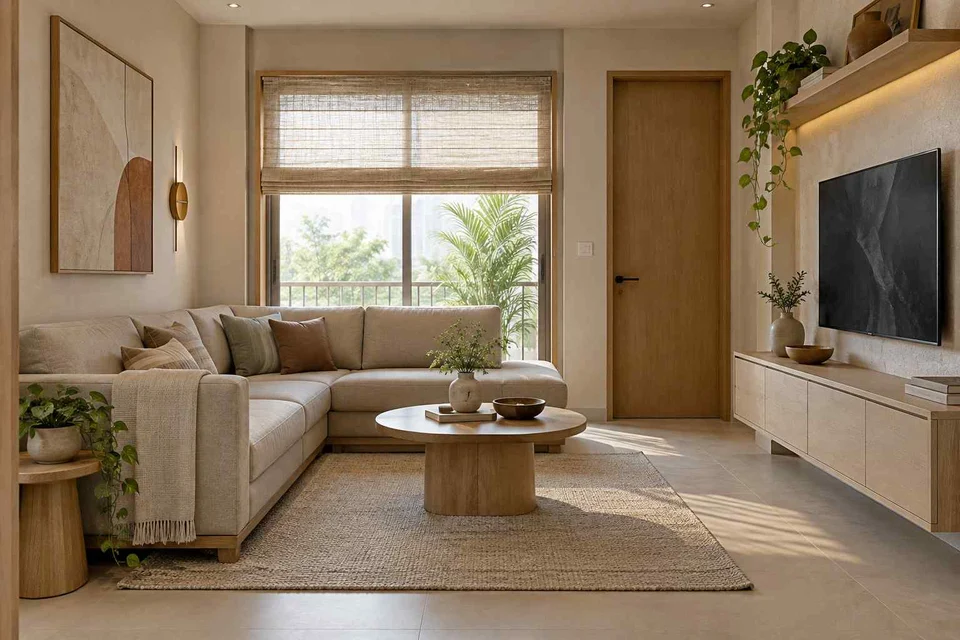
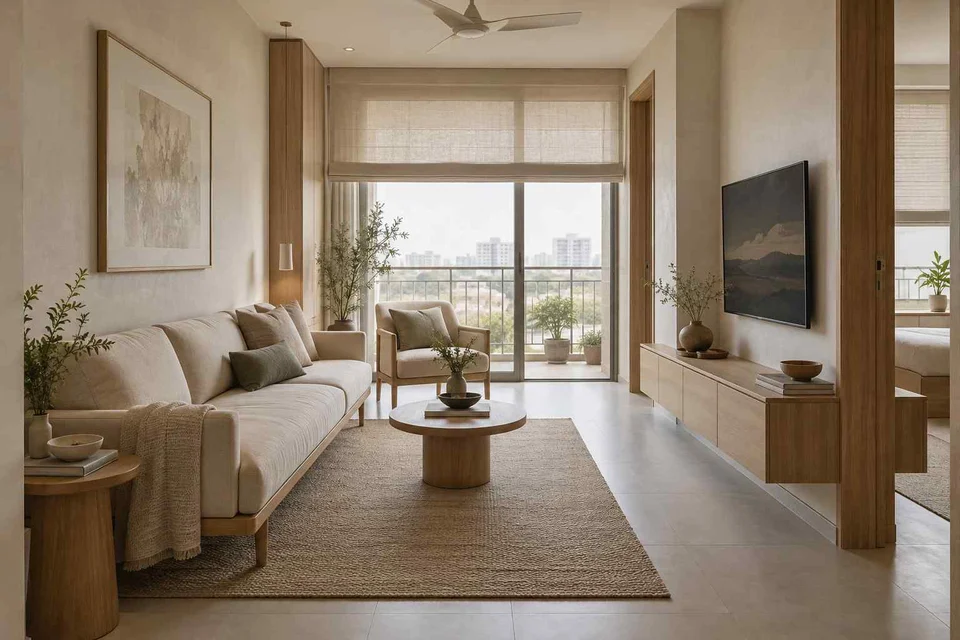
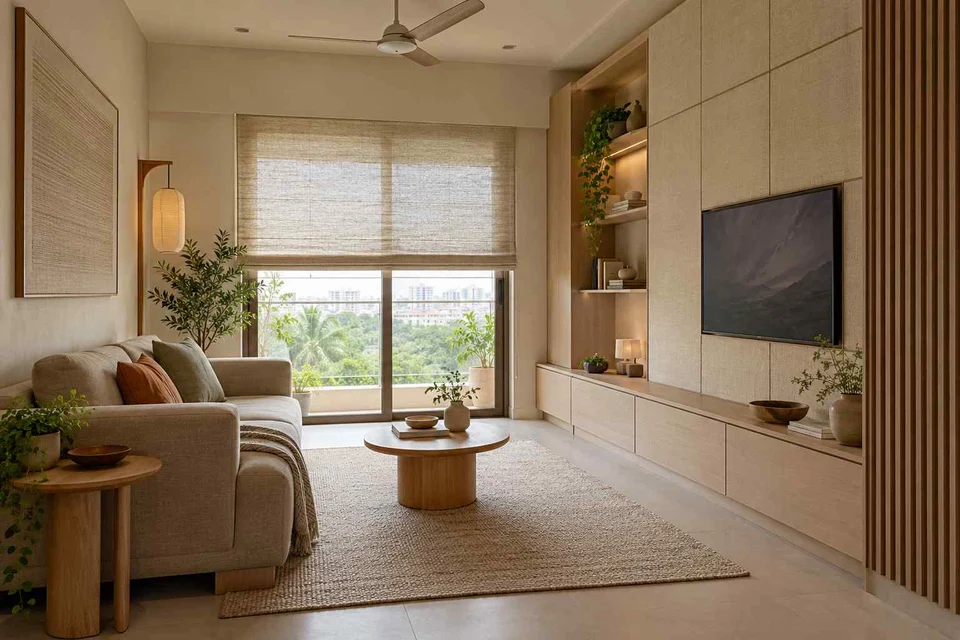
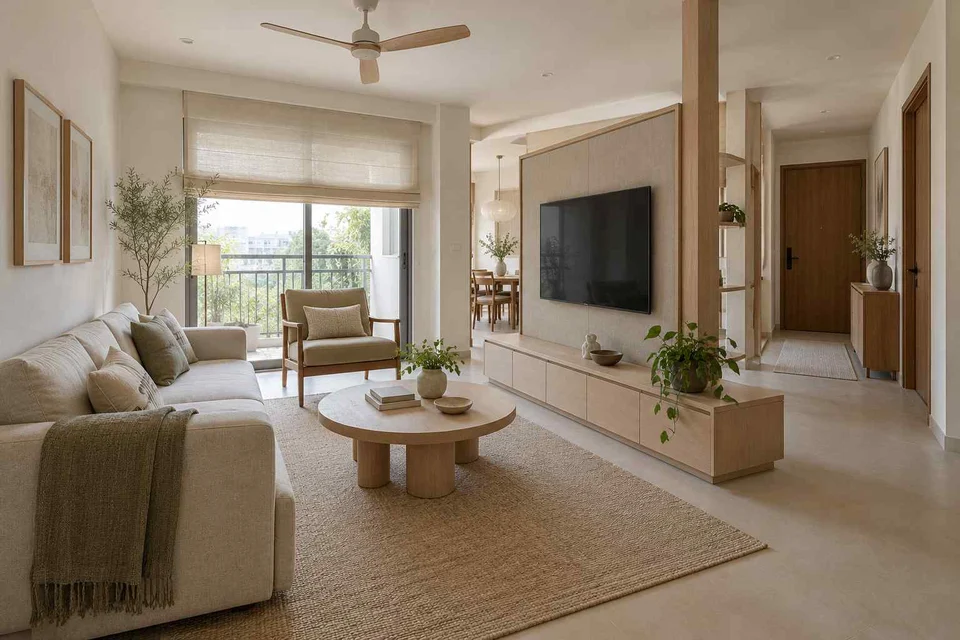
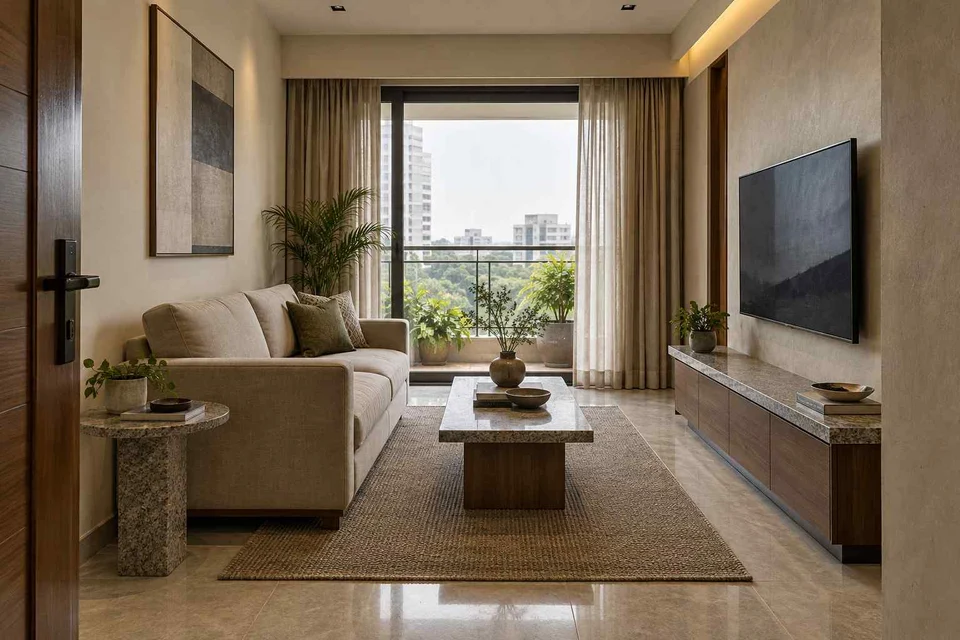
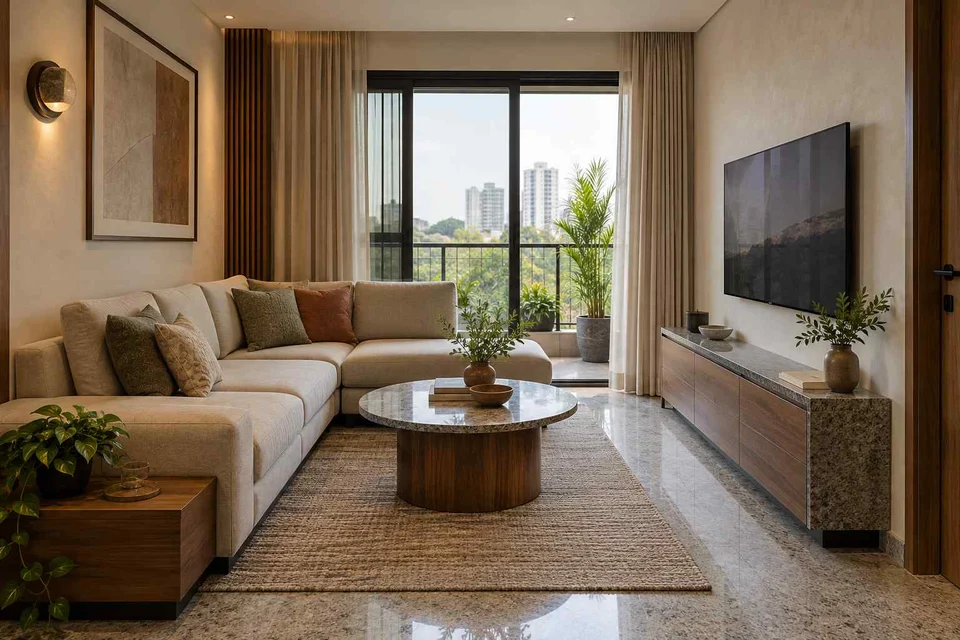
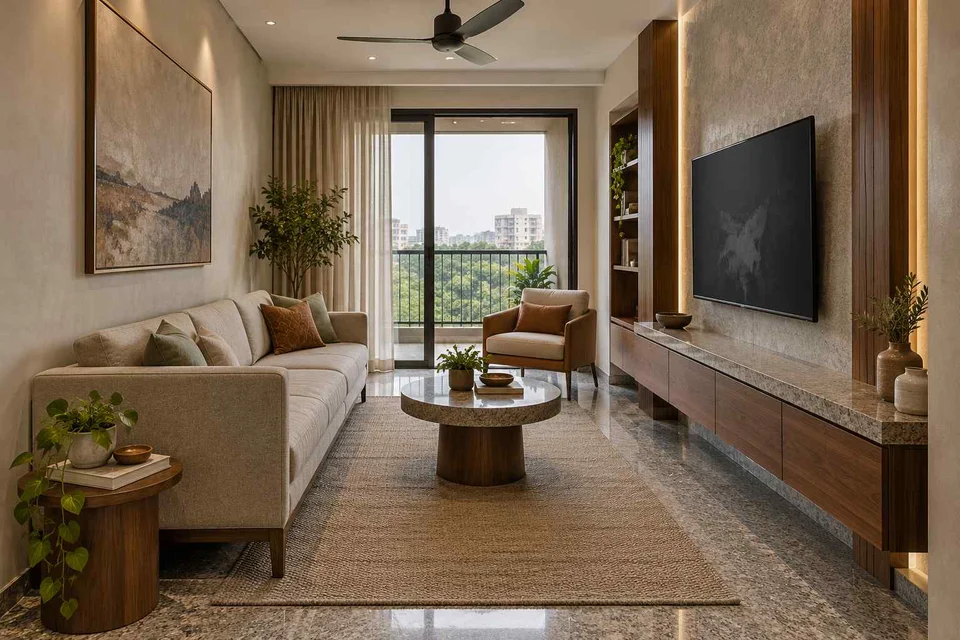
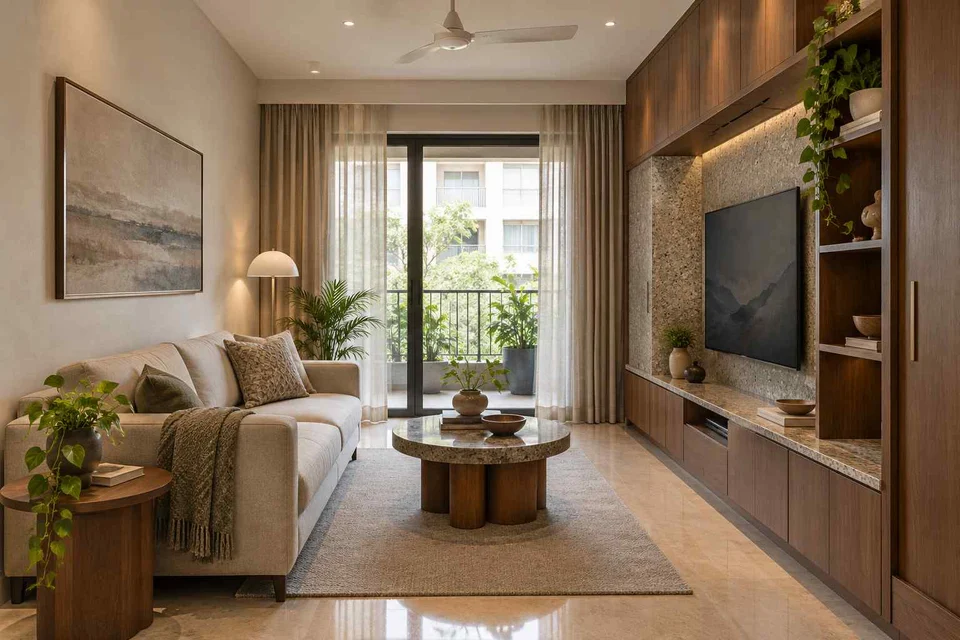
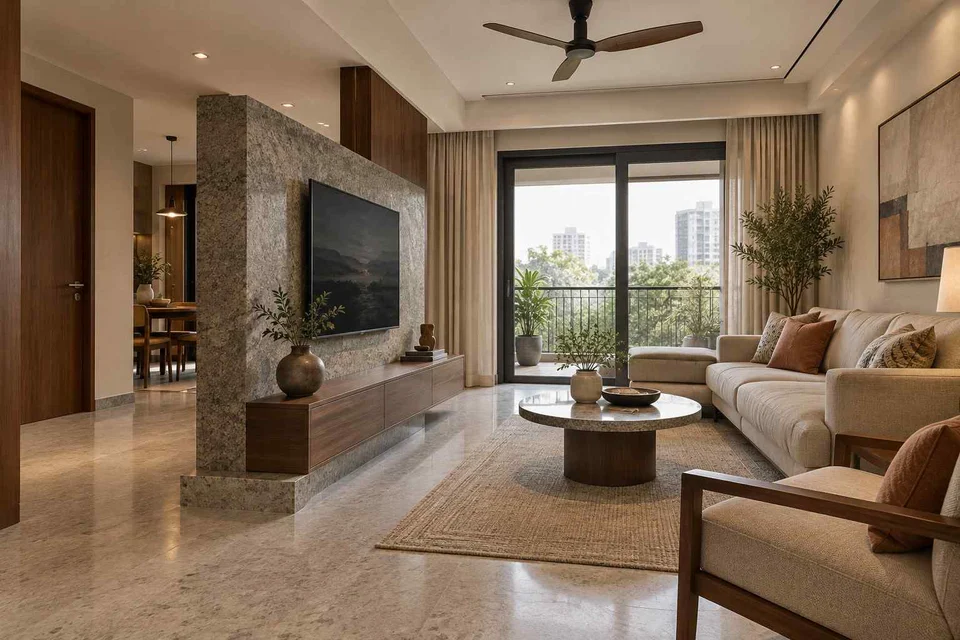
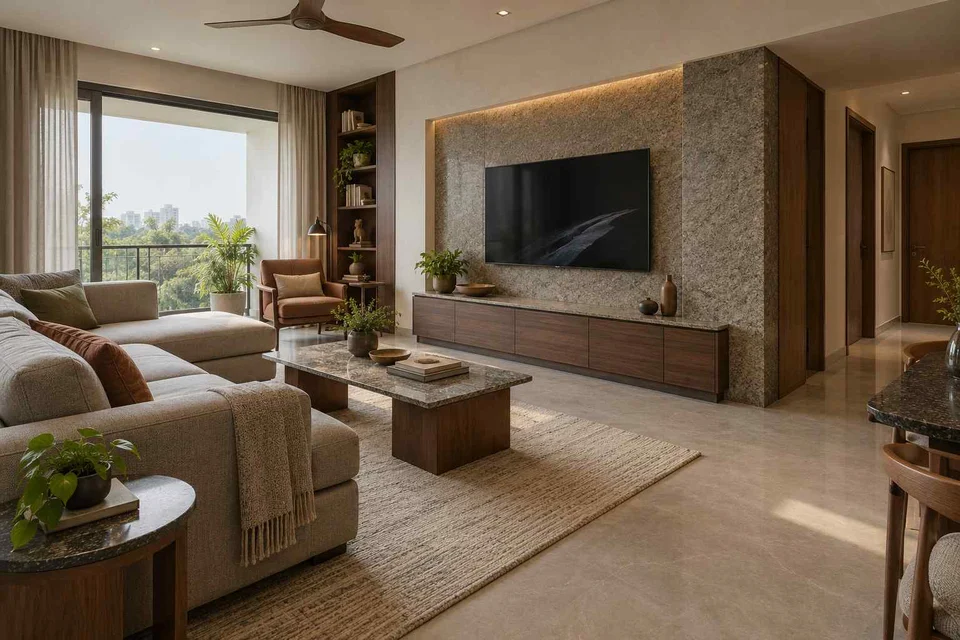
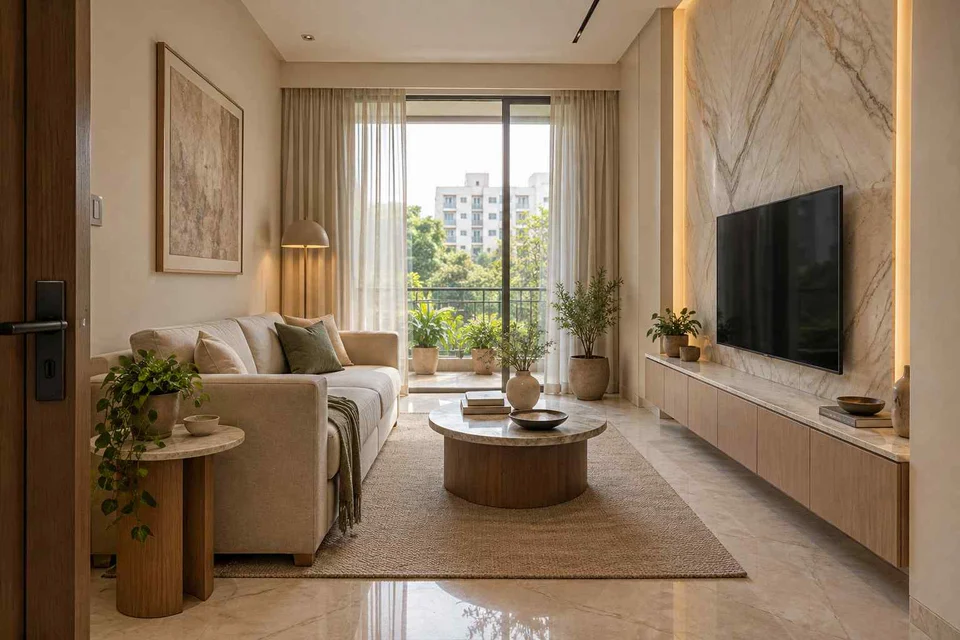
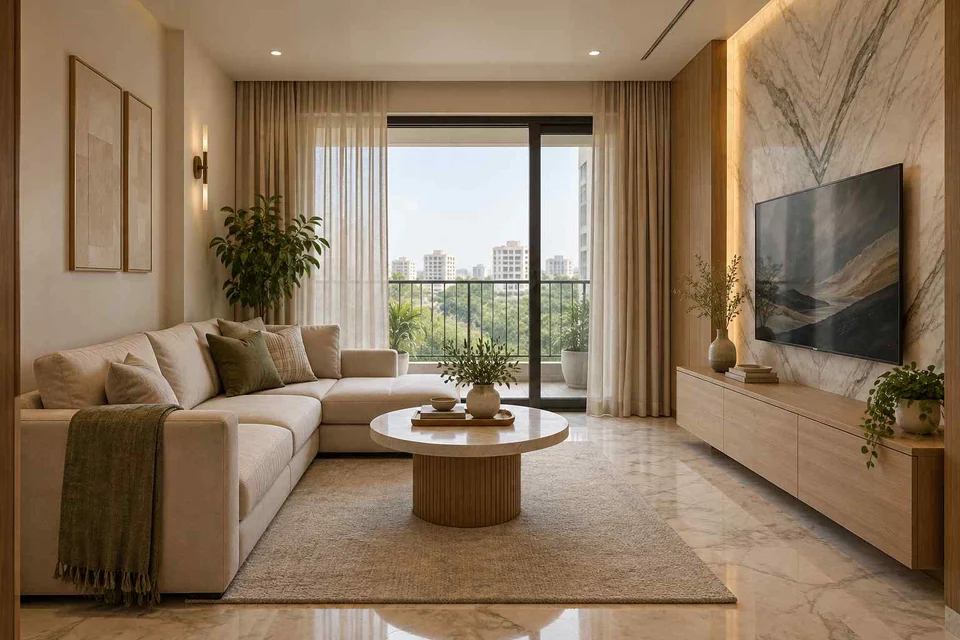
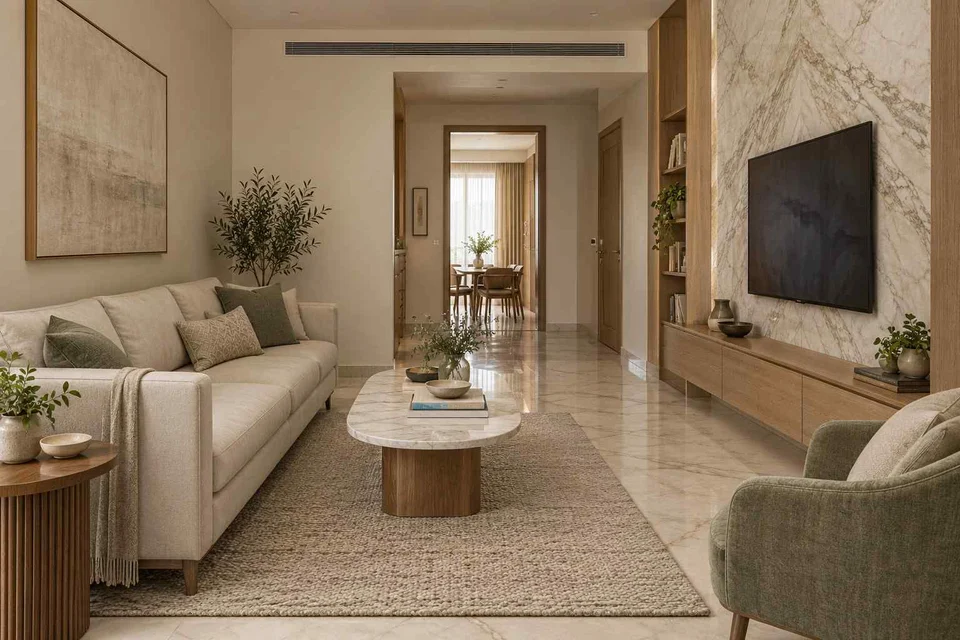
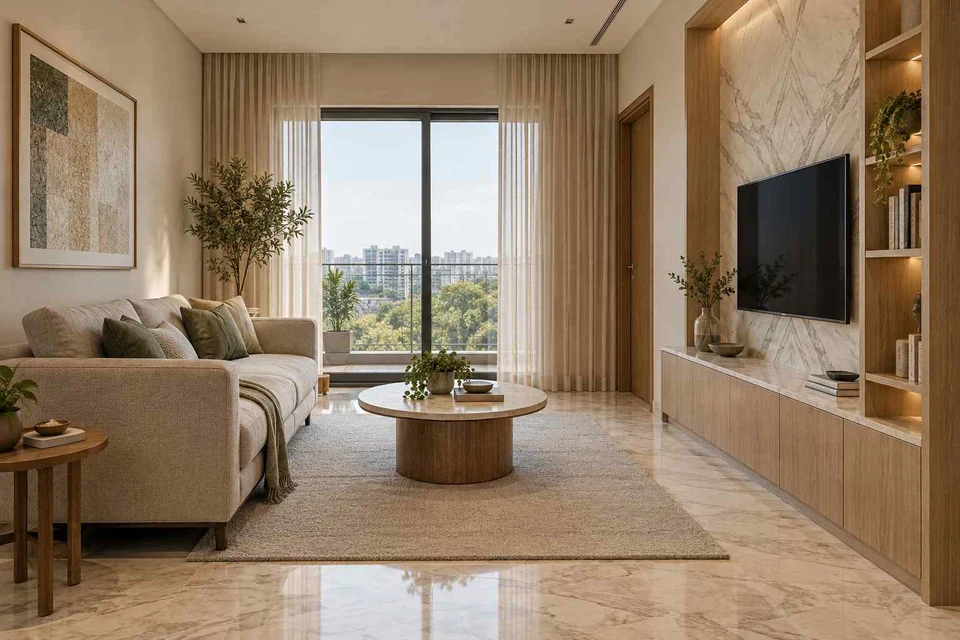
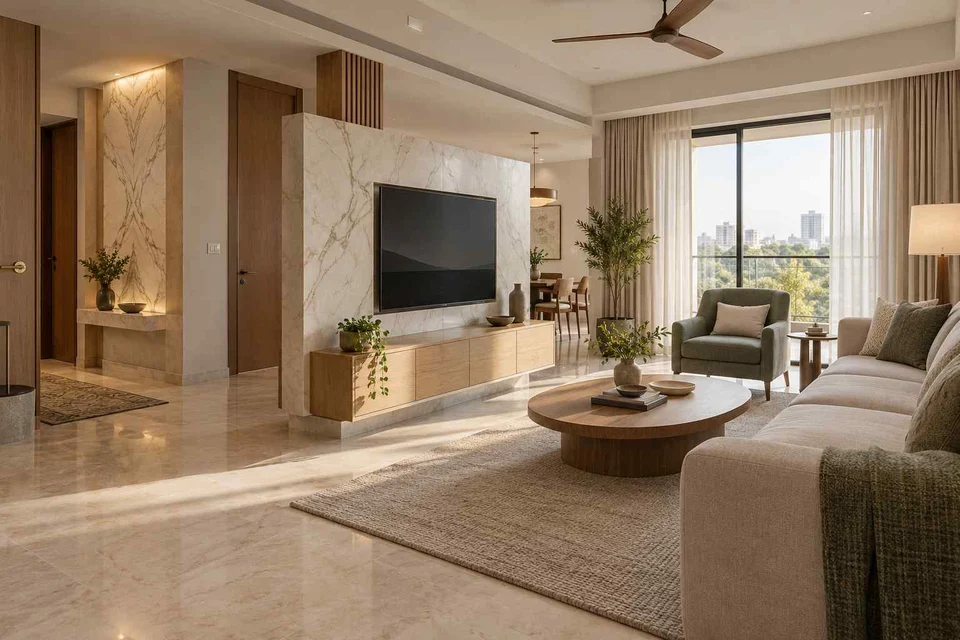
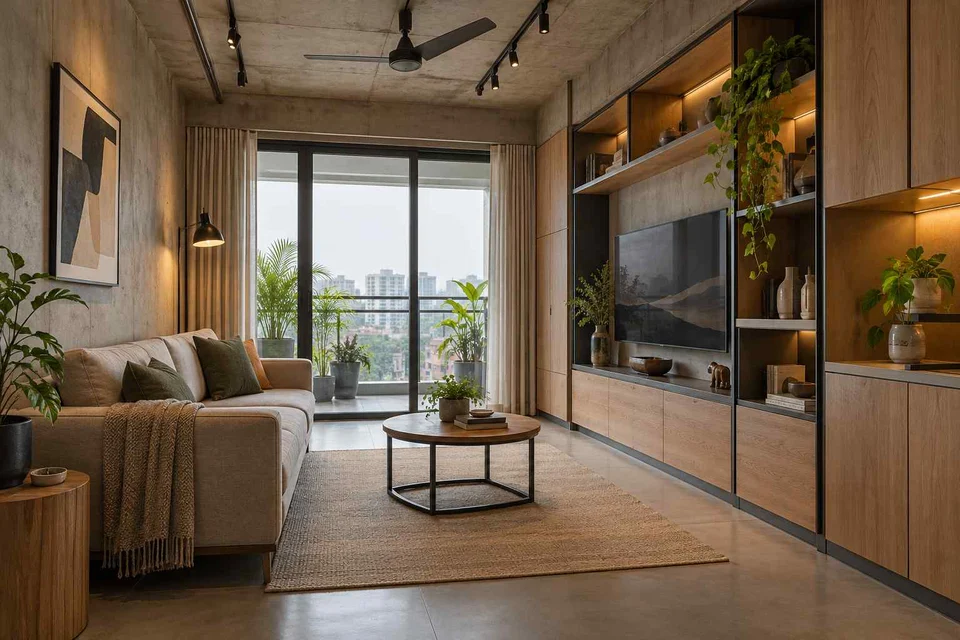
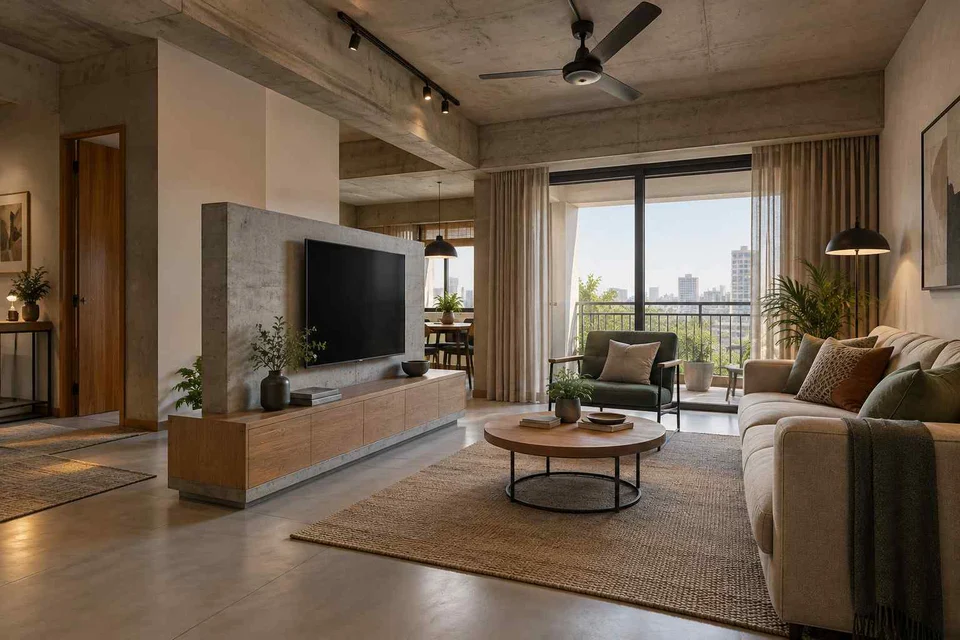
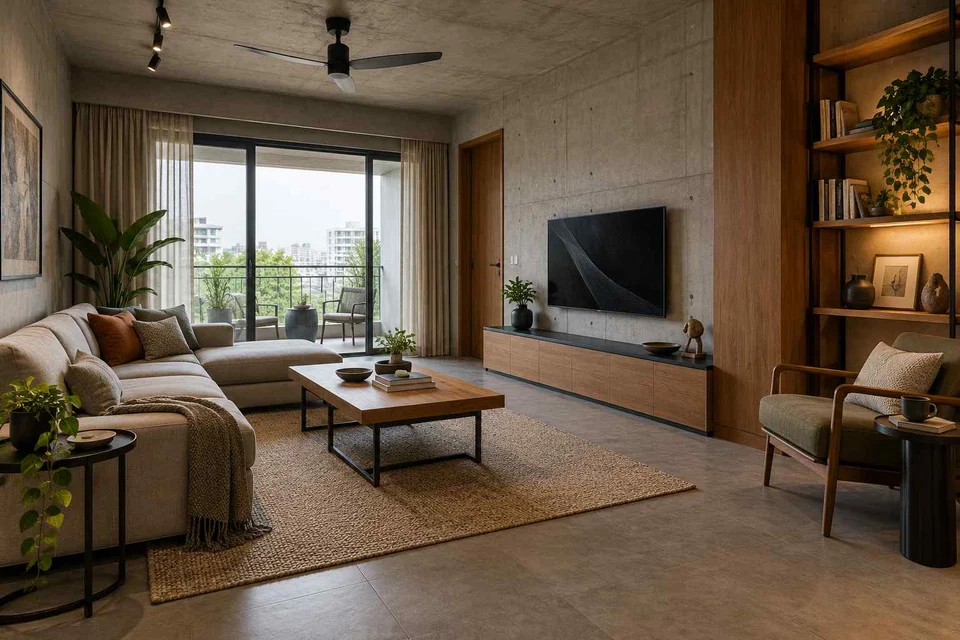
A TV unit needs to work with the seats, windows, devices and storage around it. These 60 selected concepts compare low cabinets, fuller media walls and divider arrangements across different living-room layouts. Use the images to shortlist a direction, then develop it with actual screen and equipment dimensions.
Coordinate screen position, charging, concealed cabling and everyday storage before finalising the seating layout.
Compare the approaches
Compare the visible arrangement and the question it raises for your home. These AI-generated concepts illustrate design directions; dimensions, products, fixings and internal construction are not verified.
TV unit designs: six references and the decision each raises
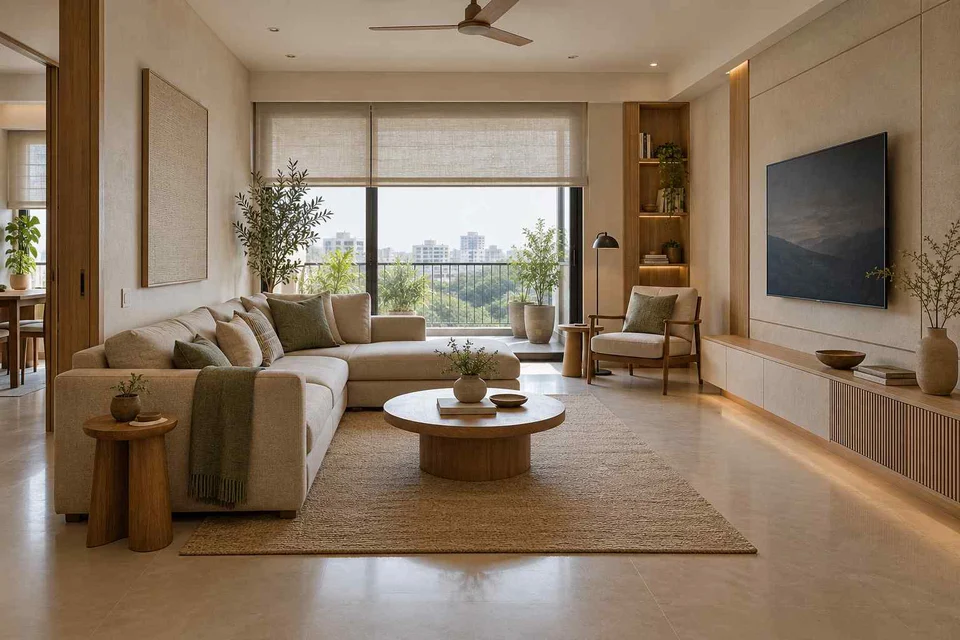
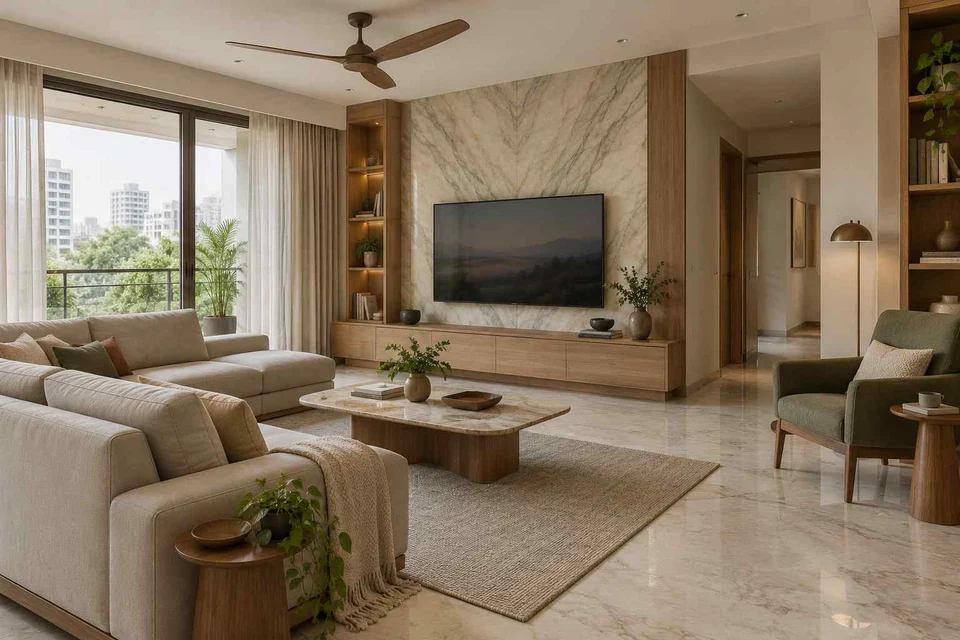
A low television cabinet faces a larger seating group with separate chairs.
Which seats need a direct screen view, and which are mainly for conversation?
Selected and visually reviewed by Aangan Editorial
on . All six references are AI-generated concepts.
FROM INSPIRATION TO A BRIEF
Turn the reference into a practical brief
Start with the screen and the seats
Mark the main seats, windows and routes through the room on a measured plan. Compare the view of the screen from each regularly used seat, including any separate armchair. Try the proposed screen position in the room before deciding on cabinetry or decorative panels. A wall that photographs well may still be awkward for your seating arrangement or affected by reflections at the times you usually watch.
Choose the role of the unit
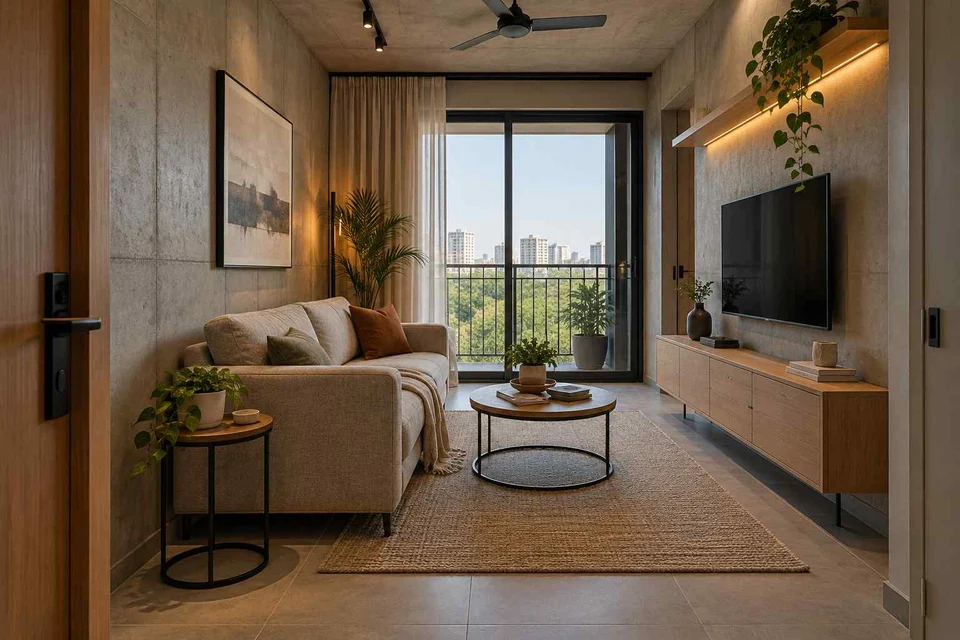
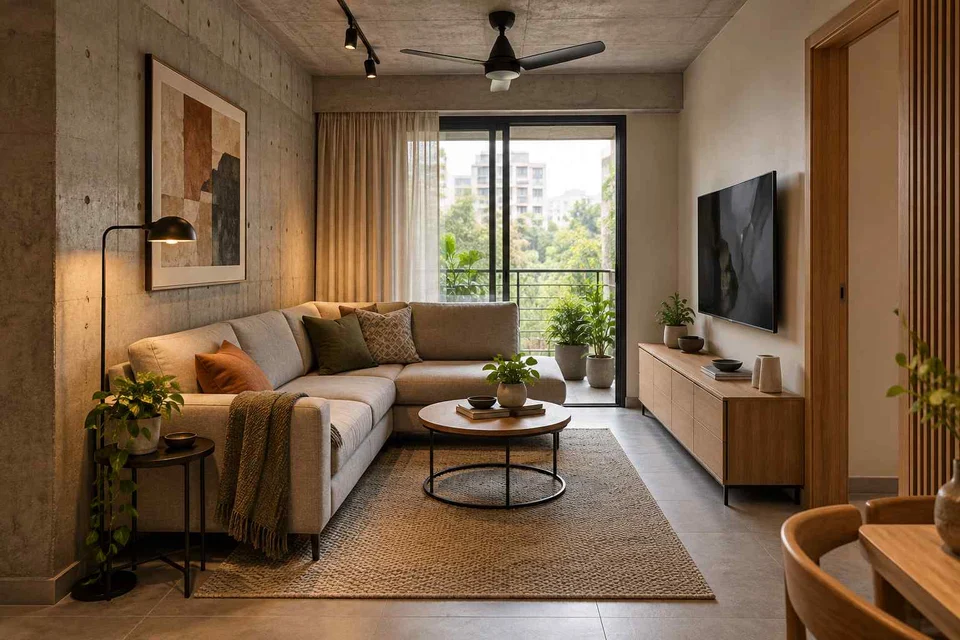
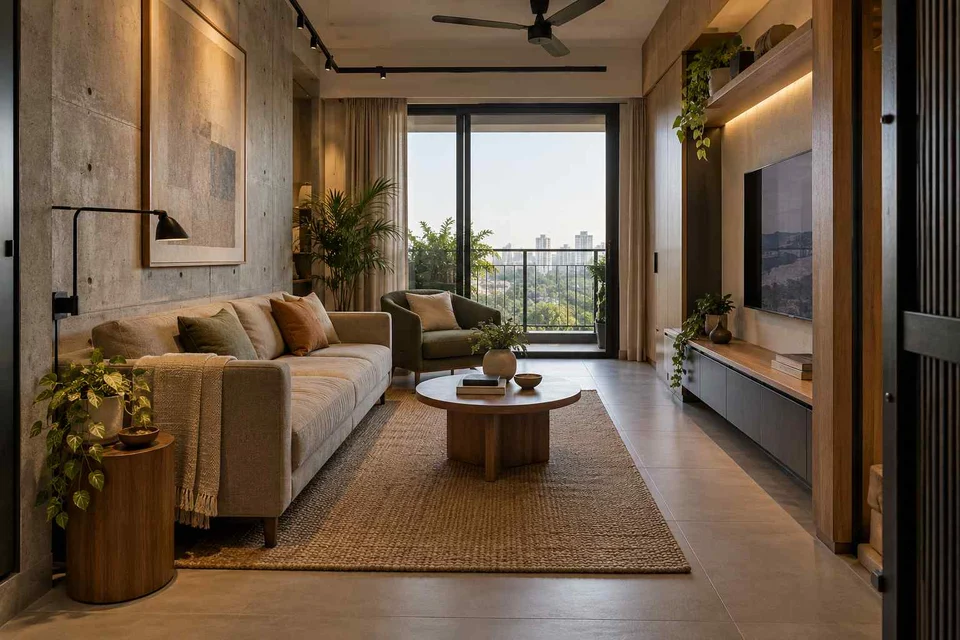
A low cabinet may be enough when you mainly need a place for devices and remotes. A larger wall unit can combine books, display objects and closed storage. A media divider can define an edge between areas, but it also needs a considered rear face and routes around it. Decide which jobs the unit must perform before adding shelves, panels or lighting to the brief.
Specify the equipment and construction separately
List the television, set-top box, router, console, speakers and accessories you intend to use. Give the designer their real dimensions and the manufacturer’s installation requirements. Ask for accessible connections, a cable route and a suitable support and fixing proposal. Theme names in the gallery describe an appearance; they do not identify a verified timber, stone, board grade or available product.
Questions to start with
Should I choose a low TV cabinet or a full media wall?
Compare what needs to be stored, the amount of wall you want to occupy and the effect on movement around the furniture. A low cabinet and a larger wall unit can both be useful; the appropriate depth and arrangement depend on your room and equipment.
Can a TV unit divide a living and dining space?
Some concepts show a media divider beside the seating. Use them to discuss views, the rear surface and circulation on both sides. Have the designer and installer resolve support, fixings and services for the actual location.
Can I order a TV unit directly from one of these pictures?
These are AI concepts rather than product listings or fabrication drawings. Save the reference and request a measured design, material samples, hardware details and an itemised quotation before ordering.
Save the ideas you like and note what appeals to you: the layout, the storage or the materials. Use our
design brief guide
to prepare for a conversation with a professional, then
create your own brief
with your city, requirements and selected photos.
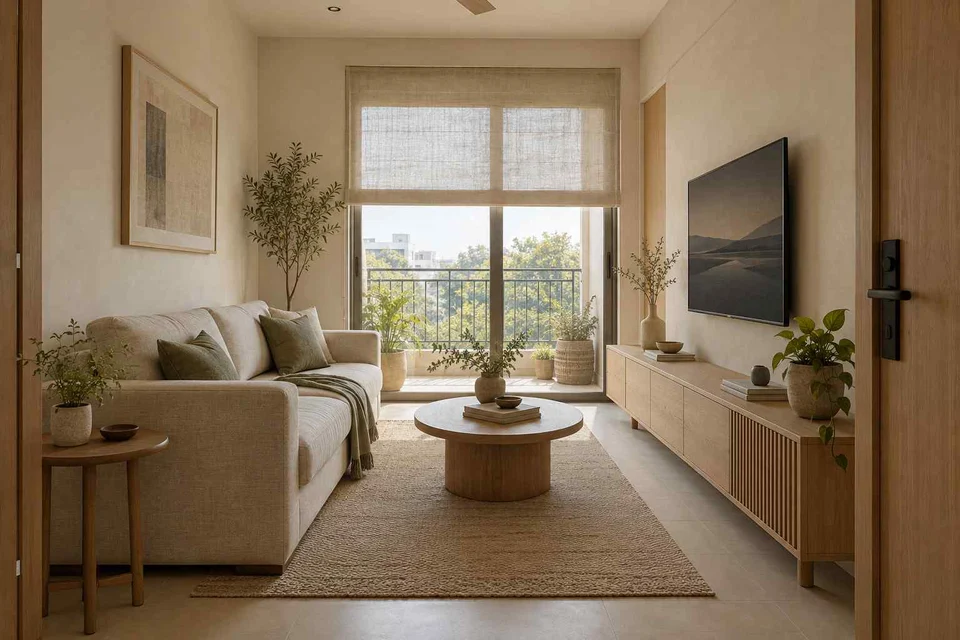 AI-generated design concept